
WARP DRIVE RESEARCH
Enabling Interstellar Travel: Investment in Fundamental Science
At Astrum Drive Aerospace, our work doesn’t stop with redefining propulsion.
We are also exploring one of the most ambitious frontiers in modern physics: the possibility of a real-world warp drive—grounded entirely in known physics, with no exotic matter, no imaginary constructs, and no violations of Einstein’s laws.
Between 2021 and 2025
Our team achieved several breakthroughs previously believed to be impossible:
Developed stable warp-bubble solutions using only electromagnetic fields.
Resolved the “negative energy” problem by demonstrating warp metrics with positive energy densities.
Reduced theoretical energy requirements from planetary scales to laboratory-scale magnetic fields.
Identified electromagnetic configurations that satisfy both Einstein’s field equations and Maxwell’s equations simultaneously.
We are proud to share an inspiring endorsement from E. Roddenberry, Executive Producer of Star Trek:

“Astrum Drive embodies the spirit of exploration and innovation that inspired Star Trek. It’s exactly this kind of bold thinking that turns science fiction into reality!”
E. Roddenberry – Executive Producer of Star Trek
This recognition highlights the broader cultural and visionary significance of our work as we push the boundaries of space propulsion.
These advances are not speculative
They are supported by peer-reviewed publications in leading physics journals, including:
European Physical Journal C.
Classical and Quantum Gravity.
Annals of Physics.
General Relativity and Gravitation.
Our work marks a significant step toward understanding how spacetime might be engineered using real, physically achievable fields—bringing warp concepts from science fiction into the realm of scientific possibility.
peer-reviewed publications in the world’s leading physics journals
Influence of anisotropic matter on the Alcubierre metric and other related metrics, revisiting the problem of negative energy:
Link: springer.com/article
Negative energy scenarios are the most widely studied for the warp metric. In fact, the prevailing view in the community so far has been that the warp metric necessarily has negative energies. In this work it is shown that the issue of negative energy densities associated with the Alcubierre warp metric with a general form function and similar metrics can be addressed when the whole non-vacuum Einstein equations of the system are examined. To this end, we have considered matter content in the form of anisotropic fluids.We have succeeded in writing the Einstein equations in such a way that some general constraints on the material content become evident. Thismeans that, in rectangular coordinates, the energy density depends necessarily on the tangential pressures of the fluid. For matter such as dust or isotropic fluids we find that that density and other related quantities become identically zero. This makes the negative energy problem spurious. It is also revealed that constructingAlcubierre-based metrics using cylindrical and spherical coordinates results in a system of equations that are amenable to more systematic analysis. The field equations constrain the dependence of the form function and how this impacts the matter content. In all cases we determine that energy density is not mandatory negative, despite the recurrent claims in the literature. This result prompts a reevaluation of the negative energy requirements and underscore the importance of cylindrical and spherical type-warps to demonstrate that negative energy density is not an intrinsic unavoidable feature of warp drives.
Alcubierre warp drive in spherical coordinates with some matter configurations
Link: springer.com/article
In this work we introduce the Alcubierre warp metric using spherical symmetry. In this way we write the Einstein equations for a perfect fluid and for an anisotropic fluid with cosmological constant. Analysing the energy conditions for both cases, we find that these cases are flexible enough to allow them to be satisfied. We also find that in the time-independent case of the warp bubble, the metric admits a timelike Killing vector and all the energy conditions are satisfied except for the strong energy condition. Moreover, in the time-independent case a barotropic equation of state known from cosmological models naturally arises.
Spherical Warp-Based Bubble with Non-Trivial Lapse Function and its Consequences on Matter Content
Link: iopscience.iop.org/article
In the present work, we study the consequences of including the lapse func-tion as an additional degree of freedom for a general spherical warp-based geometry. By allowing a non-uniform lapse function to evolve, we find that it is possible to accommodate a fluid that includes heat flow. This broadens the range of fluid types that have been studied in these systems and is consistent with the spherical warp metric. Having added the lapse function, we solved the system of equations using an anisotropic fluid with heat flow. In this way, we can examine the different characteristics of the variables of the system. Next, we study the energy conditions and establish how these are modified by including heat flux for an appropriate generic observer in a locally flat space- time. Finally, we explore all energy conditions using the numerical solutions and verify the regions where they are satisfied.
Warp Bubble Geometries with Anisotropic Fluids: A Piecewise Analytical Approach
Link: sciencedirect.com/article
We present a comprehensive analytical study of spherically symmetric warp bubble configura-tions in the framework of classical general relativity. We use a simplified ADM-type metric with a trivial lapse and a non-trivial radial shift function, which resembles a Painlevé–Gullstrand type metric. Employing this metric, our approach leads naturally to an anisotropic energy –momentum tensor characterized by an equation of state that emerges naturally from the equations. To reconcile the strict boundary conditions with the requirement of a localized matter distribution, we adopt a piecewise—defined model for the energy density. This construction allows us to confine possible violations of the dominant energy condition to finite and controlled shells, while ensuring that the weak and null energy conditions are globally satisfied. We illustrate our method with two representative examples: a one-shell exponential decay profile and a double-shell profile incorporating an additional power-law factor. Our results demonstrate that, by properly tuning the model parameters, it is possible to design warp bubble geometries that are not only mathematically consistent, but also physically more feasible, providing a promising stepping stone towards the development of realistic warp bubble models.
Gravitational effects of sources inspired by ideal electromagnetic fields in spherical Painlevé–Gullstrand coordinates
Link: sciencedirect.com/article
This article develops static, spherically symmetric “warp-bubble–like” spacetimes sourced by classical electrostatic configurations, using a Painlevé–Gullstrand–type metric with unit lapse in which Einstein’s equations enforce an anisotropic-fluid equation of state \(p_r = -\rho\) and fix \(p_\perp(r)\) once an energy-density profile \(\rho(r)\) is chosen. By prescribing piecewise-defined electromagnetic-inspired sources—Coulomb, Yukawa-screened, dielectric-layer, and Hulthén-type fields—the authors construct models with flat interiors, curved exteriors, and controlled matching via Israel junction conditions that reveal purely tangential thin shells whenever the field profile is discontinuous, while smooth dielectric profiles avoid such shells altogether. A systematic analysis of energy conditions shows that pure Coulomb fields satisfy all classical conditions, screened fields remain regular but violate the dominant energy condition due to enhanced tangential stresses, and the dielectric layer satisfies only the dominant condition in its material region, highlighting how realistic, non-exotic electromagnetic matter can generate highly anisotropic yet analytically tractable spacetime geometries.
At Astrum, we’re paving the way for a new era in space exploration
Satellites that operate far longer, cost less to launch, and enable deep-space missions that are not feasible with today’s fuel-limited propulsion systems. Our next major milestone is an in-orbit demonstration of our propellantless, electricity-only propulsion system, the final step before commercialization.
Take the Next Step
Whether you’re an investor, engineer, or strategic partner, this is your opportunity to deepen your understanding and engage with us:
Learn More & Connect – Start a conversation about our technology, roadmap, and team.
Access Technical & Investment Resources – Request our technical overview, publications, and investment materials.
Schedule a Deep Dive – Book a session to explore mission fit, unit economics, or collaboration opportunities.
NEWS
07/24/2025 WarpDrive Update:
Our latest peer-reviewed article, “Warp bubble geometries with anisotropic fluids: A piecewise analytical approach,” marks another advance in spacetime engineering research.
In this study, we analyze spherically symmetric warp bubble models using a simplified metric with a non-trivial radial shift—similar to the Painlevé–Gullstrand metric—leading directly to an anisotropic matter description. Our method introduces a piecewise-defined energy density, allowing us to precisely localize regions that may violate strict energy conditions. This framework ensures that the weak and null energy conditions can be satisfied globally, while any departure from the dominant energy condition is confined to controlled, finite shells.
We demonstrate the versatility of this approach with concrete models, including both single- and double-shell profiles. By carefully tuning parameters, our results show that these warp bubble solutions can be made mathematically consistent and physically plausible, moving warp bubble concepts a step closer to realistic implementation.
Read the published article: doi.org/10.1016
01/11/2025 Company Update:
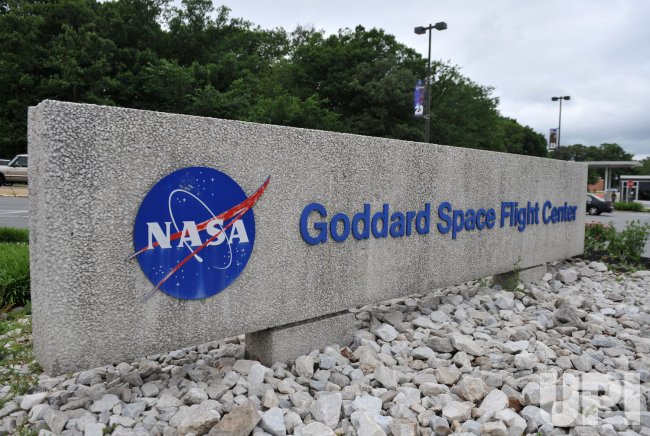
We were invited to NASA to talk about our propellantless space propulsion system and warp drive research.
The panel starts at 3:00 PM On line and Building 3 Auditorium
12/30/2024 Warp Drive Update:
We derived an analytic solution requiring only positive energy densities and pressures, attainable under laboratory conditions and consistent with all known energy constraints, effectively providing a practical prescription for realizing warp bubbles. So in short we have the recipe for how to make warp bubbles in a lab. In this configuration, the energy density, pressure, and shaping function remain positive and experimentally controllable, ensuring the fulfillment of all energy conditions. We can realize these conditions employing two counter-rotating electromagnetic fields that satisfy both the Einstein field equations and Maxwell’s equations; at specific frequencies and energy densities, these fields induce a stable warp-bubble configuration. These results constitute exceptional progress in the field!
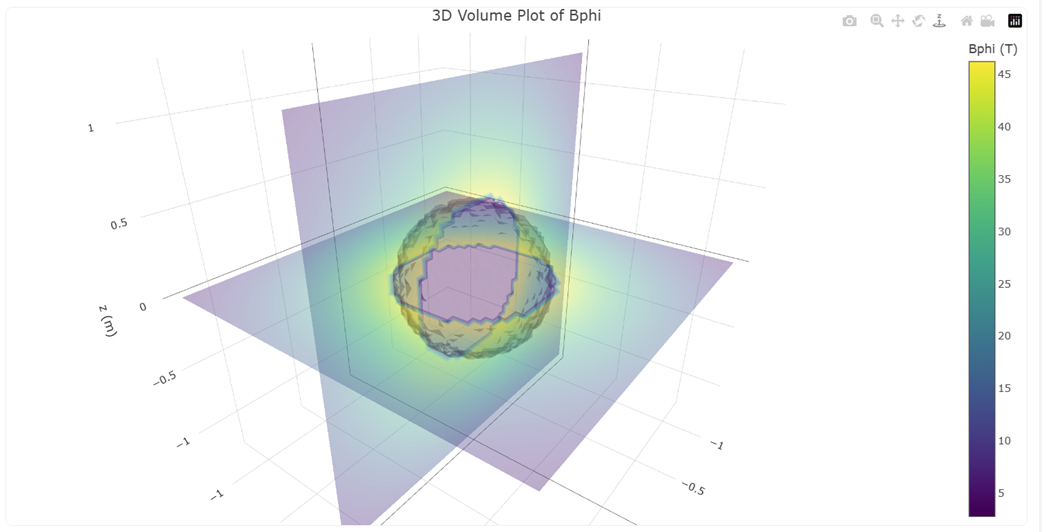
Above is 3D diagram of the magnetic field lines arranged radially, indicating how they support the necessary pressures inside the warp bubble.
10/03/2024 Company Update:
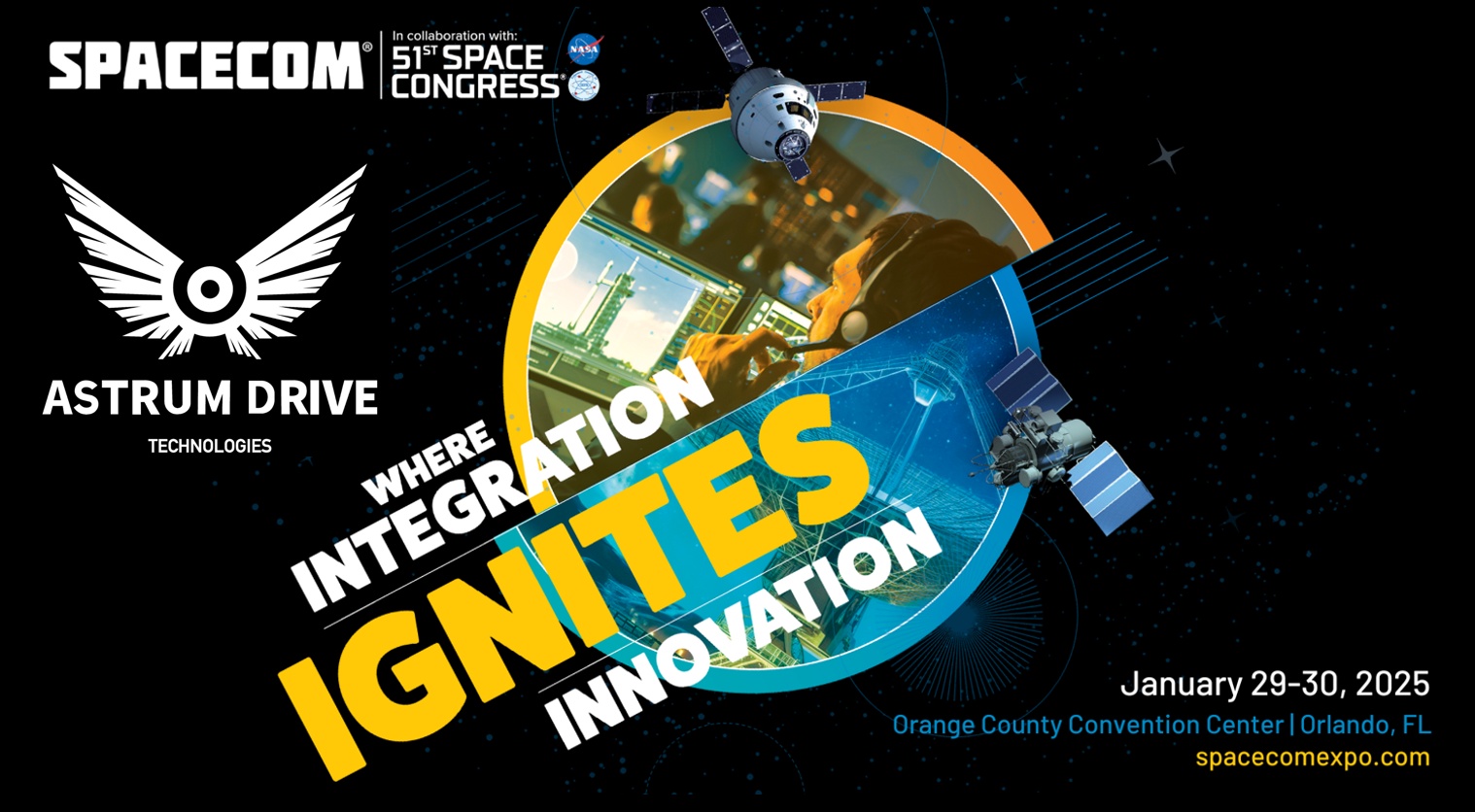
For the third year in a row, we have been invited to SpaceCom 2025, the largest space conference in the U.S., to discuss our propellantless space propulsion and warp drives research. The conference will take place on January 29-30, 2025, in Orlando, Florida.
09/30/2024 Project Pegasus Update:
Our cutting-edge research leverages the Zel’dovich effect for electromagnetic wave amplification using a multi-stage system with rotating metallic components. By utilizing high-speed rotations, superconducting magnets, and a multi-stage amplification approach, we have designed a system capable of amplifying magnetic fields by orders of magnitude. This breakthrough allows us to achieve unprecedented magnetic field strengths, pushing the boundaries of what is possible with current technologies.
03/29/2024 WarpDrive Update :
We are excited to announce the publication of our latest research article, “Spherical warp-based bubble with non-trivial lapse function and its consequences on matter content.”
In this work, we investigate how introducing a non-uniform lapse function as an additional degree of freedom impacts general spherical warp bubble geometries. By evolving the lapse function, our study shows it is possible to accommodate fluid models that include heat flow—broadening the spectrum of fluids considered in these systems.
We systematically solve the field equations for an anisotropic fluid with heat flow, enabling a deeper examination of the system’s variable properties. The article analyzes how energy conditions are affected by the presence of heat flux for a generic local observer, and employs numerical solutions to identify where the energy conditions are satisfied across the bubble region.
These results expand the landscape of physically plausible warp bubble models and highlight the impact of allowing heat flow in spherical configurations.
Read the published article: https://doi.org/10.1088
10/03/2023 Company Update:
We received funding from the National Science Foundation SBIR Phase I Project Grant in partnership with The Morningbird Foundation to test our warp-drive framework in a lab.
We were able to integrate the spherical warp-drive metric, electromagnetic fields, rotation, heat fluxes, radial and tangential pressures, anisotropies, and null fields into a unified framework with the aim of designing and conducting laboratory experiments to manipulate space-time.
4/18/2023 WarpDrive Update:
We are excited to announce a major breakthrough published in General Relativity and Gravitation. Our research demonstrates that negative energy is not required for a functional warp drive—a finding that challenges decades of accepted physics.
By carefully analyzing Einstein’s equations with anisotropic fluids and exploring warp drive metrics in various coordinate systems, we found that the energy density of the warp system depends on the type of matter involved. In many cases, such as dust or isotropic fluids, the energy density becomes zero, revealing that negative energy is not an unavoidable barrier. This resolves a fundamental issue in warp drive research and suggests that practical solutions may be achievable with realistic materials.
For more information, see the published article: Link a Warp Drives – revisiting the problem of negative energy.
1/13/2023 WarpDrive Update:
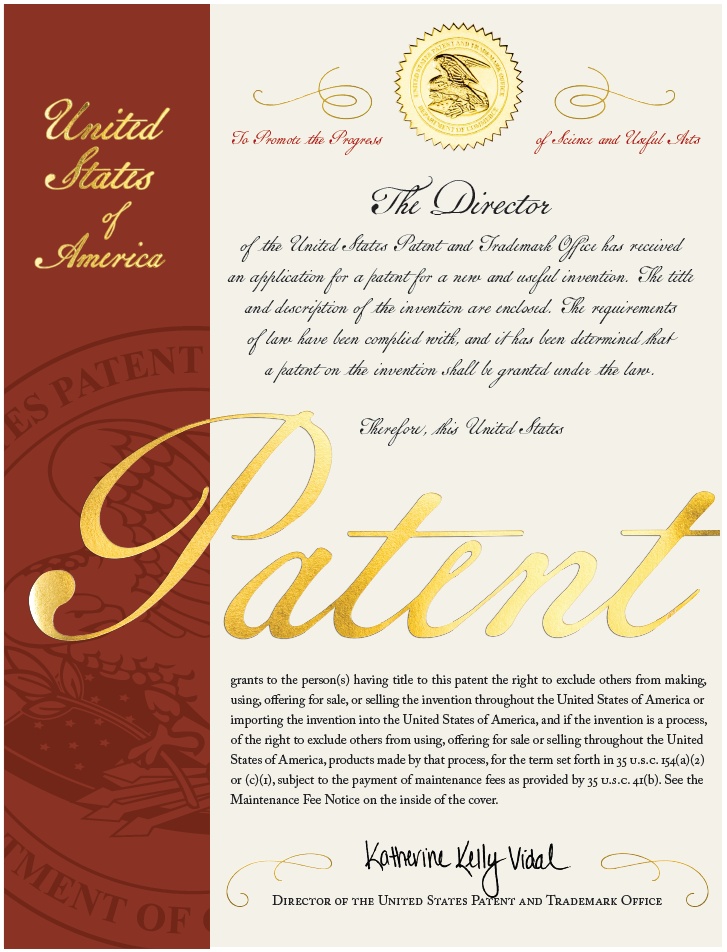
We received a US patent for our Warp Drive propulsion.
We were able to integrate the spherical warp-drive metric, electromagnetic fields, rotation, heat fluxes, radial and tangential pressures, anisotropies, and null fields into a unified framework with the aim of designing and conducting laboratory experiments to manipulate space-time.
This research is consistent with the general relativity and will be published in top-tier physics journals.
1/12/2023 WarpDrive Update:
We are pleased to announce a breakthrough in spacetime modeling, published in a top-tier physics journal. Our latest work introduces a new warp bubble solution with favorable spherical symmetry.
Building on previous concepts from Alcubierre and Bobrick, we developed a metric that maintains spherical symmetry and analyzed its properties using perfect and anisotropic fluids, including a cosmological constant. Our findings show that these models can satisfy most energy conditions, providing flexibility for different scenarios. Notably, when the warp bubble shape is time-independent, the metric features a time-like symmetry (Killing vector), and all energy conditions are satisfied except for the strong energy condition. In such cases, a barotropic equation of state, commonly seen in cosmological models, naturally appears.
This warp bubble solution strengthens the foundation for further exploration of exotic spacetime geometries.
Read the published article: https://doi.org/10.1140
11/17/2022 Company Update:
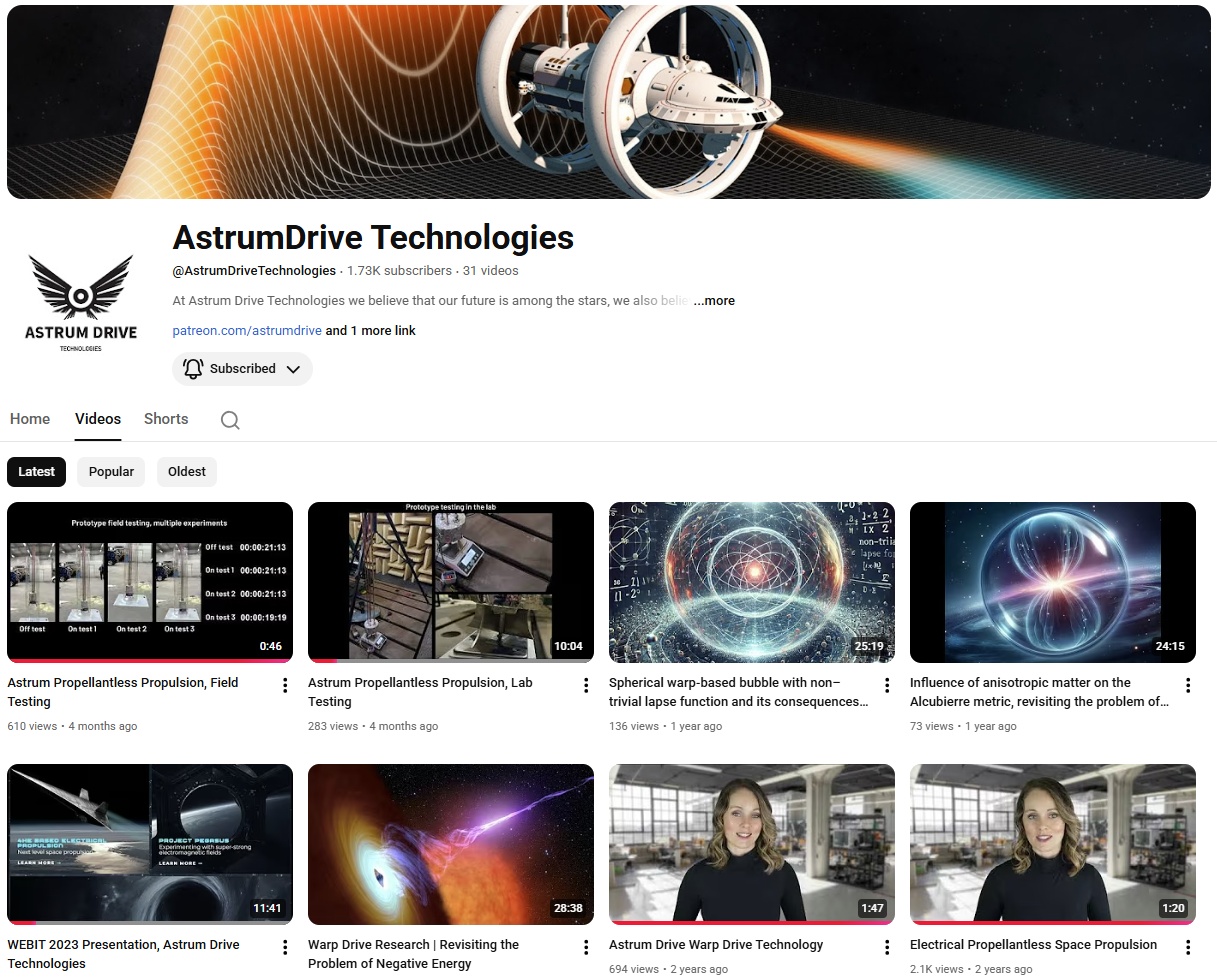
Our YouTube Channel where we post updates on our WarpDrive research reached 1500 subscribers:
We temporarily disabled some of the videos until we publish & patent the next phase of our warp drive research.
9/27/2022 WarpDrive Update:
Achieving a viable warp drive requires addressing numerous fundamental challenges. Among the most significant is the requirement for negative energy density—a property for which no confirmed physical sources currently exist. Our research program takes a complementary approach by systematically exploring new families of spacetime metrics, solution classes, and parameter regimes that operate with positive or semiclassical energy conditions, thereby circumventing this primary obstacle.
Current warp-drive models, predominantly derived from Alcubierre’s seminal 1994 framework, rest on simplified geometric assumptions, lack exploitable symmetries, and employ elementary matter-energy distributions. These limitations constrain both their theoretical tractability and experimental accessibility. Our future research directions aim to enrich the mathematical structure of warp-drive spacetimes by incorporating physically motivated ingredients and identifying mechanisms amenable to testing through analog gravity systems and eventual laboratory implementations.
Our proposed research framework focuses on two interconnected areas:
– Symmetry-Enhanced Metric Families: Development of spacetime geometries incorporating natural symmetries (spherical, cylindrical, or discrete) that both simplify the field equations and suggest physical implementation pathways.
– Realistic Matter Configurations and Thermodynamic Constraints: Incorporation of complex equation-of-state relations, thermodynamic consistency conditions, and quantum field theory corrections to ensure physical viability.
We are currently developing several novel metric proposals that exhibit promising characteristics within these frameworks. Our ongoing work includes rigorous mathematical analysis, numerical validation, and investigation of observable signatures. Results from these investigations will be submitted for peer review in leading physics journals, with preprints and publications made available as they emerge.
This research program represents a systematic effort to transition warp-drive physics from mathematical curiosity to a domain where theoretical predictions can interface with experimental capabilities, laying groundwork for future advances in spacetime engineering.
9/27/2022 WarpDrive Update:
Many problems have to be solved in order to achieve a viable warp drive. One of the best known is the problem of negative energy density but the search for sources of this type of energy didn’t bear any results. Our approach is to explore new families of metrics, solutions and regions that require positive energy densities.
The current warp-drive models, mostly based on Alcubierre’s 1994 proposal, are based on simple assumptions, contain no natural symmetries and are expressed using the simplest matter-energy configurations – this makes them impractical and difficult to work with. This is why we are adding new ingredients to the warp drive equations and looking for mechanisms that can be tested in analogous gravity and eventually in a laboratory.
What are these ingredients? They basically fall into two groups:
– Metrics with specific advantageous symmetries
– Complex matter and thermodynamic relations
We already have new metric proposals and some very interesting results. We are currently preparing several papers in prestigious peer-reviewed physics journals. Once published, we will post them here.

ASTRUM DRIVE
AEROSPACE
SITE MAP
Headquarters
Dallas TX, USA
CONTACT US
contact@astrumdrive.com